By Mark Laurence, Solutions Architecture and Technology Lead TD SYNNEX GCC Europe
My introduction to liquid cooling involved DIY waterblocks, hosepipe, barbed fittings and radiators persuaded into places they were never designed to fit. This was the early 2000s, and a certain amount of improvisation came with the territory.
That interest took me from gaming and servers at Intel to co-founding Blackcore Technologies, where we built overclocked, liquid-cooled servers for high-frequency trading. Somewhere along the way, I even heated my house with Bitcoin miners. Having bought the house with the proceeds of mining, it seemed rather appropriate.
Twenty years later, AI has brought us back to the same fundamental challenge: how do we get more performance without letting power consumption and heat become the limiting factors?
What those experiences taught me is that performance, power and cooling can’t be treated as separate challenges. And as AI infrastructure grows, I think that’s something we need to pay much closer attention to.
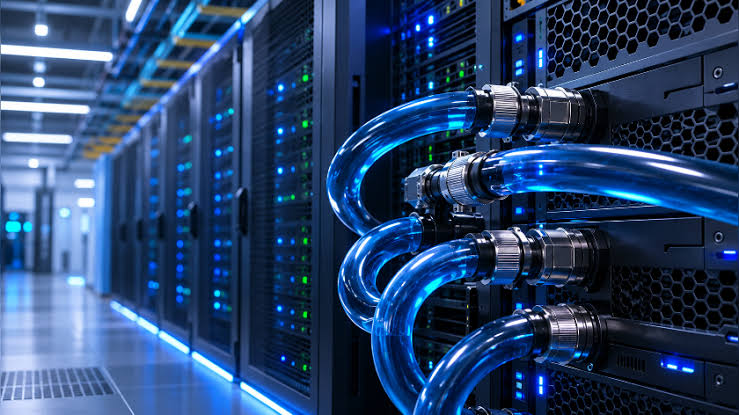
The environmental questions deserve proper answers
Concerns about AI’s electricity consumption, water use and growing infrastructure requirements are reasonable. If we want customers and communities to support this investment, we should be prepared to explain what it consumes, what it delivers and how we intend to improve it.
I’m optimistic because we have considerable engineering knowledge to draw on. But more efficient processors or advanced cooling systems aren’t automatically the answer. We need to understand how the complete infrastructure performs, including where its electricity comes from and how effectively it’s being used.
AI can feel intangible when you interact with it through a chat window. Deploying it brings you back to very physical questions: available power, cooling capacity, building constraints and the people who will maintain it.
Those decisions need to happen early, not after the hardware has been chosen.
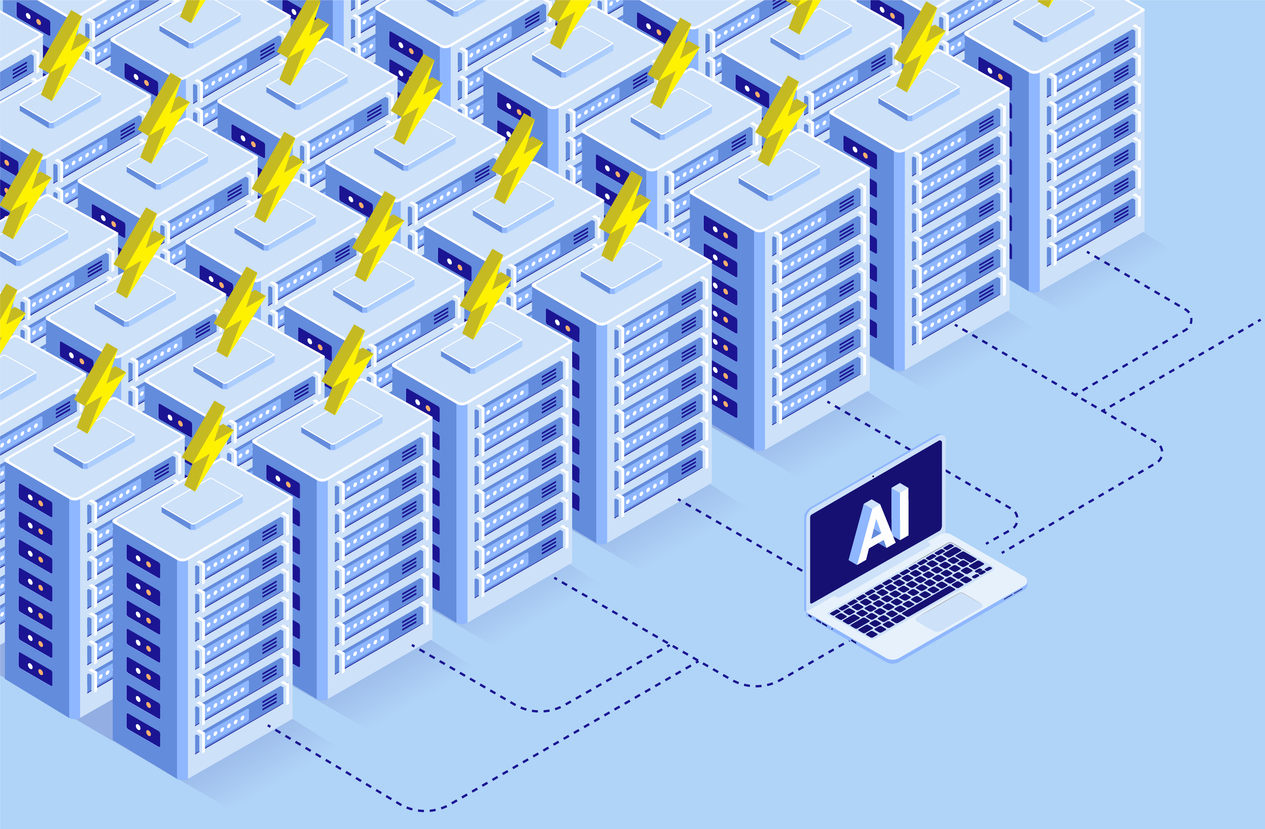
Follow the heat beyond the server
My early liquid-cooling projects taught me something fundamental: moving heat away from a processor is only part of the job. It still has to go somewhere. That remains true at a data-centre scale.
Heating my house with miners gave me a small demonstration of heat reuse. It also makes me wary of treating it as an automatic answer. Useful heat needs a suitable customer, close enough to receive it, at a temperature they can use and when they need it. Computing demand and heating demand don’t necessarily follow the same pattern.
The same thinking applies to water. “Liquid-cooled” alone tells you very little about a facility’s overall consumption. A closed cooling loop can continually recirculate coolant, but the heat still needs to be rejected somewhere. The wider cooling design determines the trade-offs between water use, energy consumption and cost.
The point isn’t simply to cool more efficiently. It’s to engineer the complete system more intelligently.
Start with the work you need to do
At Blackcore, customers needed performance for particular workloads, and we designed and tuned systems around those requirements. Enterprise AI needs the same discipline.
What does the application actually need to achieve? How many people will use it? What response time is acceptable? Does it need to run continuously?
Training, fine-tuning and inference can have very different infrastructure requirements. Even two inference applications might demand completely different configurations. It’s tempting to start with the most powerful GPU available and work backwards. But performance and efficiency depend on more than the accelerator. Processors, memory, storage, networking and system utilisation all contribute.
Buying more infrastructure than an application can use creates cost and potentially energy consumption without delivering a corresponding benefit. Choosing too little can leave the project unable to meet its purpose.
Equipment lifecycles matter too. Older hardware may still have useful work to do, although keeping it running isn’t automatically more sustainable than replacing it with something significantly more efficient.
Ultimately, we should measure the useful work delivered against the resources consumed, not judge efficiency by an individual component or cooling technology.
Bring the right people into the room earlier
Working across the AI infrastructure ecosystem at TD SYNNEX GCC, I see how much depends on connecting application requirements with component expertise, system design, integration and deployment.
That’s where TD SYNNEX GCC has an important role. We work across technologies, manufacturers and partners, helping bring together the components and expertise needed to create solutions designed around real workloads.
Choosing an accelerator is only the beginning. That decision influences memory, networking, power, cooling and the wider platform. For larger installations, facilities and energy specialists need to be involved early too.
Discovering a power or cooling limitation after selecting the compute platform is an expensive way to design a system.
My journey has taken me from improvised cooling loops to trading infrastructure and now enterprise AI. The scale has changed, but the habit of looking at the complete system hasn’t.
AI’s energy challenge won’t be solved by one cooling technology or the next generation of processors. Instead it starts with understanding the work we need to do, choosing the right infrastructure and engineering the complete solution around it. That’s how I think we earn confidence in AI’s future.